

Thames River On A Map
River Thames
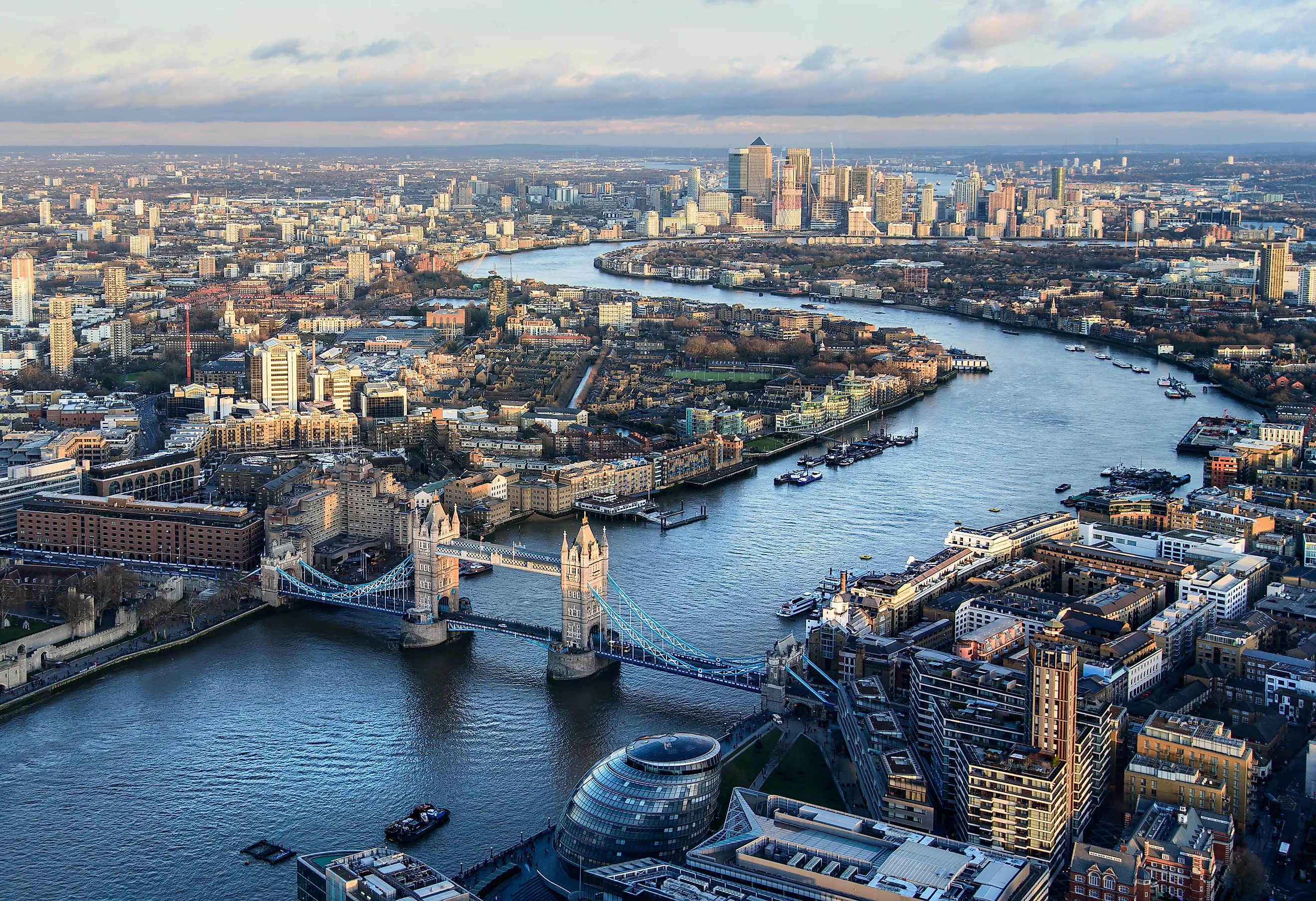
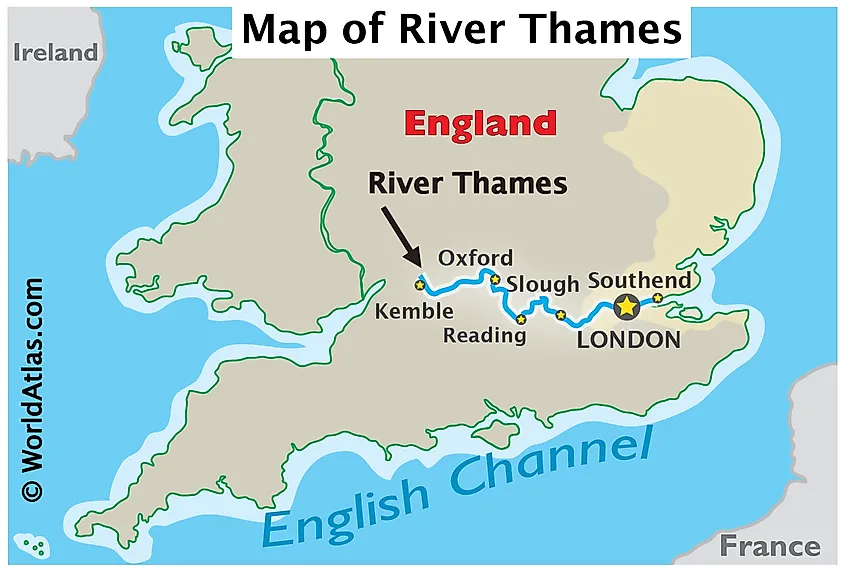
The River Thames is a 346 km river that flows through southern England, starting from Thames Head in Cotswold Hills, Gloucestershire County. It is the longest river in England and the second longest in the United Kingdom right after the River Severn. The river passes numerous popular cities, such equally London, Reading, Hendley-on-Thomas, Windsor and Oxford, where information technology is also chosen the Isis River, and flows into the North Bounding main via the Thames Estuary.
Origin Of Proper noun
The Thames is derived from a Eye English term, Temese, which is also derived from the Brittonic Celtic name, Tamesas, which could mean "dark". Flowing through Oxford, the River Thames was likewise chosen the Isis. This was due to the fact that gazetteers and cartographers in Victorian times insisted that the river be named the Isis from its source until Dorchester on Thames in Oxfordshire. Ordnance Survey maps, the national mapping bureau for Great Britain, still labels the Thames as the River Thames or Isis until Dorchester. Even so, some historians suggest that the proper noun Isis is merely a truncation of Tamesis, the Latin proper noun for the Thames. It was also named the "London River" by merchant seamen and Londoners often referred to it equally "the river".
The Thames River Bowl
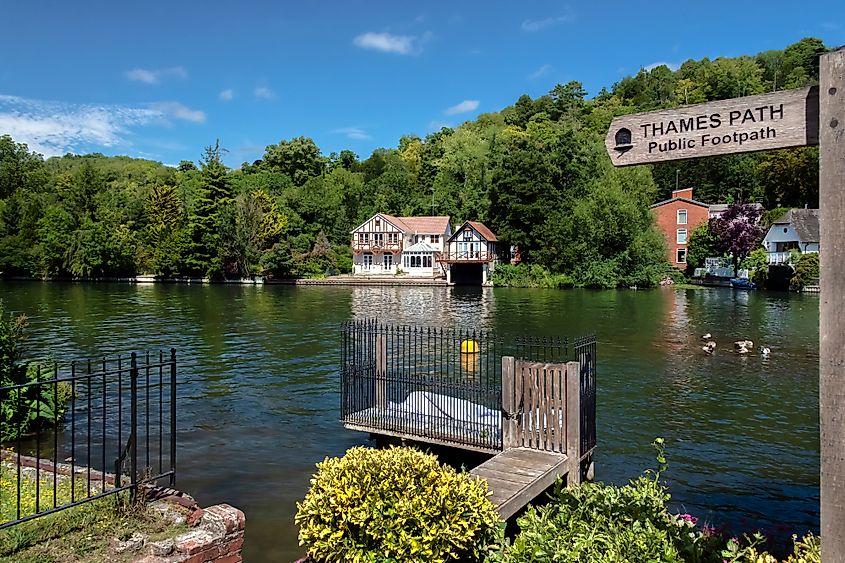
The Thames' bowl covers an area approximately16,130 km2 and includes both rural and heavily urbanized areas in the east and northern parts. However, the western parts of the catchment area are mainly rural. The conventionally known source of the River Thames, the Thames Head, is marked with a stone and is dry out most of the year. However, there is some controversy about the actual source of the Thames, as it argued that the Churn River might be the origin of the river. Remarkably, the Thames provides two-thirds of London's drinking water. There are 16 bridges that cross the River Thames in Greater London alone, well-nigh prominently the Golden Jubilee Bridges and the Millennium Bridges for pedestrians.
The Nore is the sandbank that marks the mouth of the Thames Estuary and the confluence point of the Thames and the North Body of water. The river is divided into two sections: tidal and not-tidal. The Tideway is the river's lower reaches (below Teddington Lock), which has tidal reaches upwardly to Teddington Lock. This section of the River Thames is subject to tides from the North Sea and includes the upper Thames Estuary in improver to the Pool of London. Moreover, the tidal section includes the driest parts of mainland U.k. and includes well-nigh of London. The tidal limit, which marks the finish of the tidal effect, is at Teddington Lock, hence extending the not-tidal section betwixt the Thames' origin and Teddington Lock. Despite the tidal limit, loftier tides in the leap can raise the head water level in the accomplish to a higher place Teddington and can reverse the river catamenia for a limited time. This non-tidal section includes 38 tributaries that feed the Thames.
Geology
The River Thames is estimated to take started flowing 58 million years agone as a discrete drainage line in the Thanetian stage of the late Paleocene epoch. The Thames kickoff flowed on its existing course through what is now Oxfordshire before changing its form 500,000 years ago, turning to the north-east through Hertfordshire and Eastward Anglia, catastrophe at the North Ocean near Ipswich in Suffolk, England. This change in class was caused past the bursting of large water ice lakes' banks during the Ice Historic period, virtually 450,000 years ago. At that fourth dimension, the Anglian ice advance resulted in a new route for the Thames through Berkshire and on into London, so the river rejoined its original course in southern Essex near the nowadays River Blackwater estuary. At this bespeak, the Thames entered a freshwater lake in the southern North Sea basin. The lake overspilled and caused the formation of the Aqueduct River and and then the Dover Strait gap between modernistic-day Britain and French republic.
Brickearth can be seen interlaid with the clay on the valley sides of the Thames and some of its tributaries. These deposits were brought past the winds during the periglacial periods, meaning that marshes were actually part of the mural. The Thames lies within a chalk trough, and geological deposits incorporate London Clay. This clay was formed lx-50 million years agone when Britain was all the same submerged in tropical seas.
Wild animals
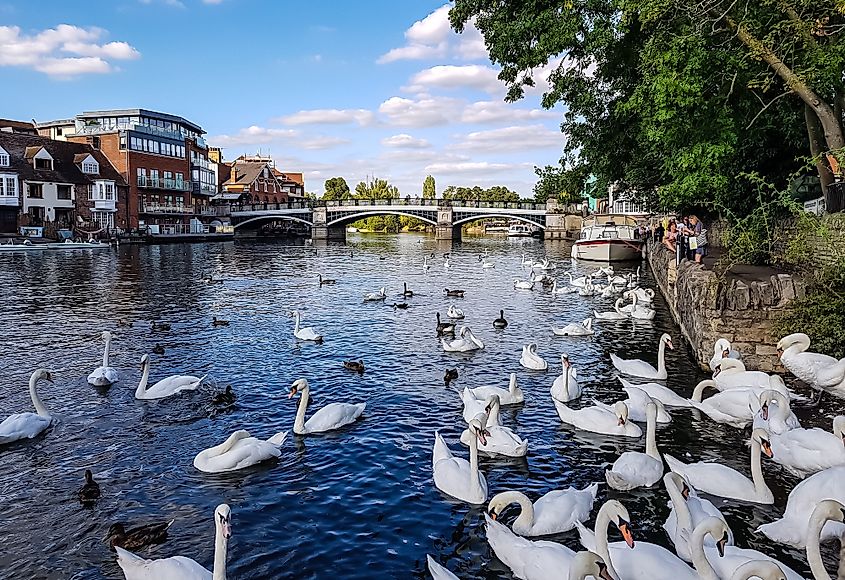
The Thames is a common place for various species of birds that either feed off the river or nest on it. These include the cormorant, black-headed gul and the herring gull. A rare type of swan, called the black swan, can also be seen in that location. In addition to those, there are many non-native birds that tin be seen in that location such equally the Canada geese, Egyptian geese and bar-headed geese. Having both freshwater and seawater in dissimilar sections, the Thames supports many populations of fish. However, these populations are at risk due to pollutants leaking into the river. Freshwater fish include dark-brown trout, chub, dace, roach, barbel, perch, pike, bleak and flounder. Short-snouted seahorses take as well been discovered in the river. Moreover, the Thames Estuary is dwelling house to many aquatic animals such as the grey and harbour seals, which take been seen upriver in Richmond. Bottlenose dolphins and harbour porpoises are besides common in the Thames.
Human being Action And Economy
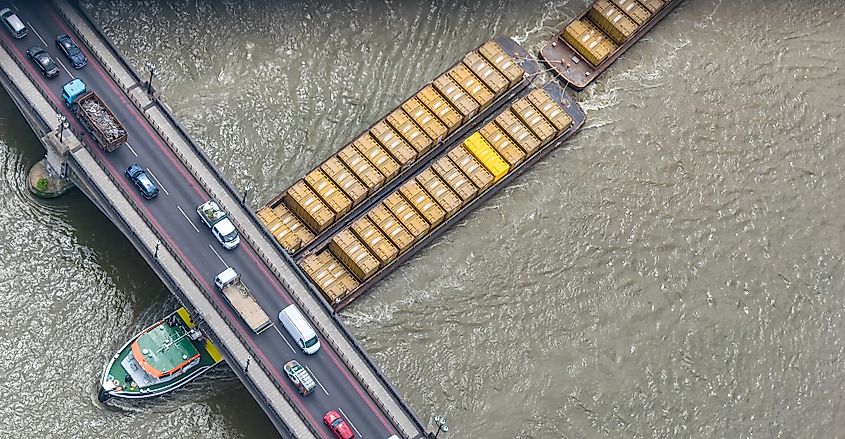
The River Thames was considered an economic resources throughout history as it served to exist a maritime route, a purlieus, a fresh water source and a source of food. Evidence dating back to Neolithic times proves that humans were benefitting off the river along its length, including excavations from Dorney Lake nearly the Thames. Bronze Age sites and artifacts have been also discovered along the banks of the river including settlements at Lechlade, Cookham and Sunbury-on-Thames. The Thames became the busiest waterway past the 18thursday century, every bit London became the center of the British Empire and the hub of most economical activities. However, the advocacy of transport and decline of the Empire in the 20th century reduced the economic importance of the river.

Thames River On A Map,
Source: https://www.worldatlas.com/rivers/river-thames.html
Posted by: paynefarmay.blogspot.com
0 Response to "Thames River On A Map"
Post a Comment